
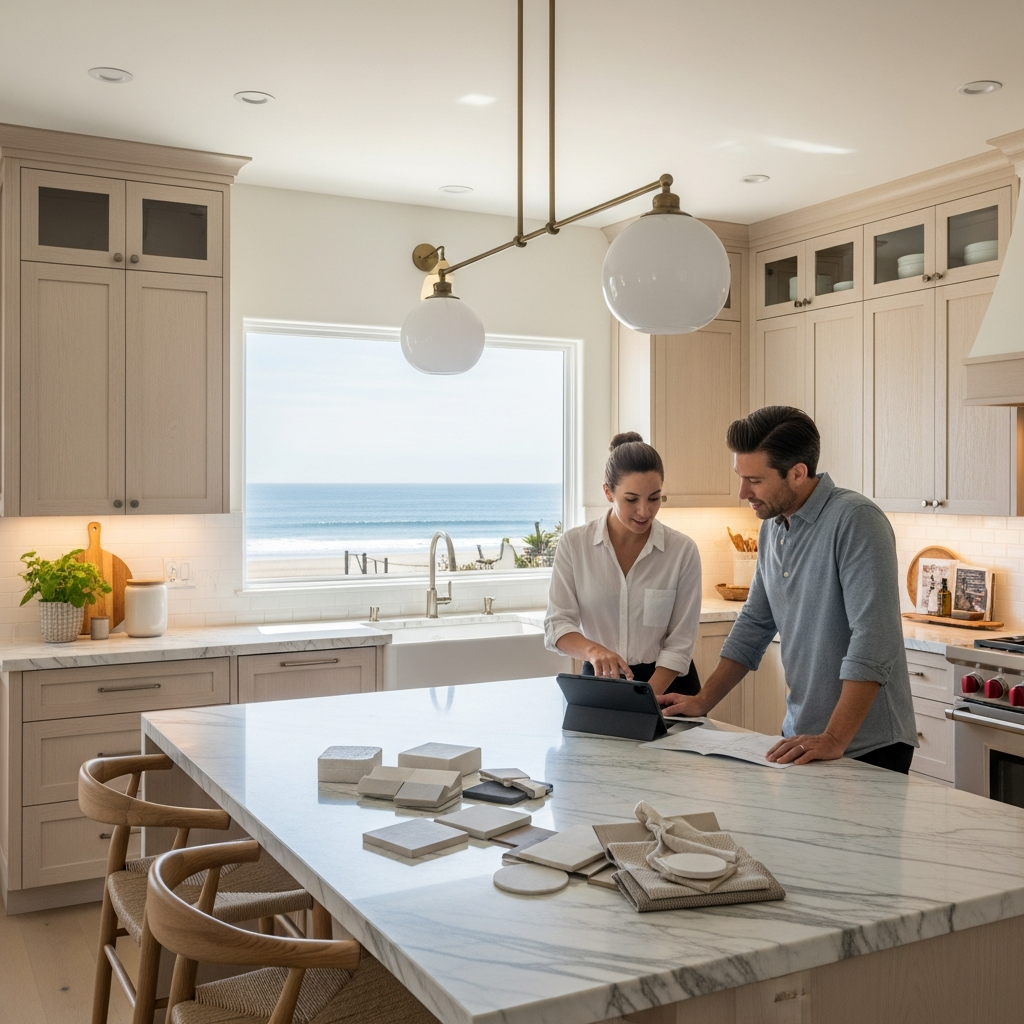
When neighbors in Huntington Beach start talking about a kitchen remodel, the first curiosity is nearly always the same: what does a realistic investment look like for a project in our coastal city? While it is tempting to search for a single definitive number, the real answer is more nuanced—and, if approached correctly, much more empowering. A realistic outlook is one that begins with context: the age and condition of your home, the design ambition you have in mind, and the unique coastal considerations of our local environment. Before you ever pick a cabinet door style, a thoughtful conversation about scope, sequencing, and expectations will help you build a plan that feels confident and balanced from start to finish. Early planning is also where you calibrate how to prioritize materials and features that make sense for life near the water, and this is where an experienced local team becomes invaluable. If you are just beginning to explore ideas and want a clear, homeowner-friendly starting point, you might find it helpful to talk with specialists who focus on kitchen remodeling in coastal Southern California and understand the particular demands of Huntington Beach homes.
Realistic planning starts with understanding the bones of your kitchen. Many Huntington Beach houses—especially those built from the 1960s through the 1980s—were designed with compartmentalized rooms, limited electrical capacity by modern standards, and fewer lighting circuits than we prefer today. If your dream involves opening a wall to the dining room, expanding an island, or adding generous task lighting, expect the planning phase to address structural engineering, electrical service adjustments, and potentially new plumbing routes within slab-on-grade foundations. None of these elements are glamorous in the way a statement range or quartz island may be, but they are the foundation of a reliable, long-lasting result.
In coastal communities like ours, materials selection plays a larger role in long-term satisfaction than many homeowners anticipate. Salt-laden air can encourage corrosion on inferior hardware, and fluctuations in humidity may challenge wood movement if products are not properly constructed or finished. Choosing corrosion-resistant cabinet hinges and slides, marine-grade fasteners for certain applications, and moisture-conscious finishes can feel like small decisions, yet they dramatically influence how your kitchen behaves after years of daily use. A realistic expectation acknowledges not only how the space will look on reveal day, but also how gracefully it will wear through seasons of sea breezes, family gatherings, and the occasional sandy footprint from an afternoon on the beach.
Design ambition is another key variable. Some remodels respectfully preserve the original footprint, simply updating surfaces, storage, and lighting for a fresh, functional feel. Others reimagine the space entirely, shifting appliance locations, adding a walk-in pantry, or flipping the kitchen to a new part of the home to embrace backyard views or align with indoor-outdoor living. The more moving parts—literally and figuratively—the more important it is to tackle decisions in the right order. We start with layout, then confirm mechanical locations, and finally support the scheme with cabinetry, countertops, and finishing touches. That sequence keeps surprises in check and allows you to reserve your creative energy for the details that make you smile every day.
Realism also means budgeting for the invisible layers that deliver comfort and performance. Take ventilation, for instance. A proper hood and ducting plan is essential to keep your space fresh, especially if you love to sauté and sear. In a coastal climate, ensuring the venting path avoids salt-laden air recirculation while meeting code clearances is a small design puzzle worth solving early. Similarly, water quality matters. Many Huntington Beach homeowners choose to integrate filtration at the sink or even whole-house systems to extend the life of fixtures and appliances. Planning for these upgrades during design avoids the headache of retrofitting after cabinets are installed.
It is common to ask, “Where should I invest versus simplify?” The answer depends on your cooking style, storage needs, and appetite for maintenance. If you love to host, a generously sized island with durable seating and integrated power may deliver daily joy. If you prefer quiet mornings and quick midweek meals, a highly organized pantry with pull-outs and thoughtful task lighting could be your best friend. Meanwhile, if beach proximity means sand and moisture drift in from time to time, consider flooring that balances beauty with resilience, and finishes that wipe down easily without fuss. A realistic plan does not try to check every box. It prioritizes the handful of decisions that matter most to your household and treats the rest with tasteful restraint.
Another part of realism is acknowledging the rhythm of a remodel in our city. The City of Huntington Beach has a well-structured permitting process, and plan review timelines can vary based on the scope of work. Homes in certain neighborhoods may be subject to HOA guidelines that influence exterior vent locations, window changes, or trash enclosure rules during construction. It is entirely manageable, but it is worth recognizing how those administrative steps interact with the construction calendar. When you build your schedule with permitting, lead times, and inspection milestones in mind, the process feels smoother and you avoid last-minute scrambles.
On the subject of lead times, cabinet manufacturing and specialty items often set the pace. Custom or semi-custom cabinetry built to fit older homes with unique dimensions requires careful field measurement to prevent unpleasant surprises. Stone slabs, handmade tile, and specialty fixtures may also have longer procurement timelines. The best way to keep this all realistic is to lock core selections early and align your order schedule with the demolition and rough-in phases. That way, when walls close and floors go down, your cabinetry and finishes are calmly waiting rather than racing the clock.
Let’s talk about scope clarity, a topic that might be the most underrated part of achieving a realistic outcome. Scope clarity means putting into writing exactly what is included—from cabinet box construction and door style to the number of recessed lights, undercabinet lighting specifications, outlet locations, and appliance ventilation details. It also means documenting what is not included. Doing this with care avoids assumptions and ensures your vision is translated into buildable, code-compliant plans. Clarity also positions you to make informed decisions if you discover something unexpected in the walls, like an old plumbing stack that should be updated while the room is open. With a transparent baseline, it is easier to say yes, no, or “let’s re-allocate from this other area.” For many homeowners, working with a design-build team that integrates design, estimating, and construction keeps these tradeoffs visible and straightforward. In the midst of defining that scope, it can be helpful to revisit resources tailored to our region’s homes and climate, such as local guides to kitchen remodeling that illustrate how choices interact in coastal environments.
Realistic expectations also consider how your family will live during the remodel. If your kitchen is out of commission for a stretch, planning a temporary setup—perhaps in the dining room or garage, with a microwave, hot plate, and refrigerator—can keep daily life more comfortable. When construction teams map activities carefully and maintain a tidy site, families find the transition manageable. Communication is vital here: a weekly update covering what was completed, what’s next, and any decisions pending allows you to plan meals, school schedules, and work-from-home needs with minimal disruption.
Because Huntington Beach enjoys abundant natural light, your lighting plan can elevate both form and function. Overhead recessed lights, pendants over the island, and undercabinet task lighting form a trio that serves different moments throughout the day. For example, you might want gentle illumination before sunrise while making coffee, then brighter task lighting during meal prep, and finally a warm, welcoming glow for evening unwinding. Dimmers help you dial in the mood, and choosing LED fixtures with a color temperature that suits your finishes can prevent unexpected shifts in how countertops and paint colors appear.
Storage is another area where a realistic approach pays dividends. Start by listing what lives in your kitchen today and what is always searching for a better home. Stand mixers, Dutch ovens, air fryers, espresso machines—these items are beloved, but they also demand intentional storage. Deep drawers with heavy-duty glides handle weight with grace, while vertical tray dividers organize baking sheets and cutting boards. Consider zones: a baking center with pull-out spice storage near the oven, a coffee station with a discreet trash pull for filters and grounds, a smoothie nook with a dedicated outlet and a hidden cubby for the blender pitcher. When storage aligns with your habits, the kitchen supports your routines rather than working against them.
Countertop choice deserves special attention in our coastal context. Engineered quartz remains a top pick for many households thanks to its durability and easy care. Natural stones like quartzite or certain marbles can be used beautifully when paired with realistic expectations about maintenance and patina. The key is matching the material’s strengths with your lifestyle and cleaning habits. If you adore the character of a living stone, you may treasure how it evolves; if you want a set-and-forget surface, a performance material may be the better path. Either way, pairing the slab with an appropriate edge profile and a backsplash that respects the home’s architecture helps the whole space feel cohesive.
Appliances should be selected with ventilation, electrical capacity, and cabinet fit in mind. Flush-install refrigerators that sit comfortably within a cabinet surround, panel-ready dishwashers for a seamless look, and induction cooktops that pair efficiency with cleanability are popular here. Each decision benefits from early coordination between designer, cabinet shop, and electrician to verify clearances and power needs, especially if you are upgrading to modern electrical code requirements. In older homes, panel capacity and circuit layouts may need thoughtful updates to support today’s appliances safely and reliably.
Color and texture in Huntington Beach often lean toward airy, sun-washed palettes, but that does not mean bland. Natural white oak cabinetry with a soft matte finish, combined with a saturated island color or a richly veined slab, creates depth and warmth. Handmade tile offers quiet movement and artisanal charm. Blackened or brushed brass hardware can bring coastal contrast without shouting. Throughout, the goal is timelessness rather than trend-chasing, so that your kitchen will still feel fresh a decade from now. A realistic mindset favors enduring design gestures and well-made components over fleeting novelties.
Timelines are another facet people commonly ask about. While every project is unique, timelines tend to expand or contract based on decision speed, permitting complexity, and the degree of structural change. You can protect your schedule by front-loading decisions and approvals, aligning orders with build phases, and staying responsive to your team’s requests for sign-offs. Equally vital is allowing breathing room for inspection scheduling and any custom fabrication steps. The best schedules are those that look calm on paper because they are supported by thoughtful design work behind the scenes.
We should also acknowledge sustainability. Many Huntington Beach homeowners care about water conservation, indoor air quality, and energy efficiency. Low-flow faucets that still feel luxurious, induction cooking that lowers indoor heat load, and cabinetry built with low-VOC finishes contribute to a healthier home. These choices rarely demand aesthetic compromise; in fact, they often elevate the experience of using the kitchen day to day. They also align well with California’s broader energy goals and the practical benefits of a more efficient household.
As you assemble your plan, collect inspiration in a way that clarifies, not confuses. Save images that resonate, then review them to identify patterns. You might discover that, across dozens of photos, you prefer quiet, textural backsplashes over bold patterns—or that you are consistently drawn to sculptural pendant lighting. With those preferences in hand, your designer can curate a focused materials palette that respects the home’s architecture and distinguishes the pivotal details from the optional flourishes.
One more aspect of realism is future-proofing. Consider how your family may evolve over the next decade. Will you welcome aging parents for extended stays? Are you planning for young children to become teenagers with appetites and homework sprawled across the island? Will you be entertaining more, less, or differently? Thoughtful features like wider clearances, drawers instead of doors for base cabinetry, and layered lighting controls gracefully accommodate these changes without telegraphing themselves as “features.” They are simply good design.
In the middle of all these choices, remember that a kitchen remodel is as much about process as it is about product. Who you trust to guide design, coordinate trades, protect your home during construction, and communicate clearly will shape your experience just as much as the cabinets and countertops themselves. Look for a team that welcomes questions, documents decisions, and treats the inevitable surprises as puzzles to be solved collaboratively rather than obstacles. That spirit, more than any single selection, is what makes the journey feel steady and the outcome feel like home.
If your instinct is to continue learning before committing to a specific plan, you are in good company. Many homeowners find it helpful to start with an educational consultation that maps options against the realities of their property and their goals. Local specialists who focus on kitchen remodeling in our region can illuminate where to spend your attention for the most meaningful impact—whether that is reconfiguring circulation, adding storage that truly works, or refining the lighting plan to make your space glow at every hour.
How do I set a realistic scope for my Huntington Beach kitchen remodel?
Begin by ranking your priorities: layout changes, storage upgrades, appliance updates, and aesthetic goals. With those in place, have your designer evaluate structural constraints, electrical capacity, plumbing routes, and ventilation options. The most realistic scope is one that honors the home’s bones while delivering the handful of changes that will improve daily life. Put decisions in writing and confirm what is and is not included so that expectations are shared by everyone involved.
What coastal considerations should influence my material choices?
Salt air and humidity in Huntington Beach suggest using corrosion-resistant hardware, high-quality finishes on cabinetry, and durable countertop materials that handle everyday wear. Thoughtful ventilation and water filtration can enhance longevity. Exterior vent terminations and any penetrations should be detailed to withstand the coastal climate, and finishes that wipe down easily will keep the kitchen looking great after beach days.
Is it better to change the kitchen layout or refresh within the existing footprint?
It depends on how well your current layout supports your routines. If circulation is cramped, sightlines are blocked, or storage is fundamentally lacking, a reconfiguration may deliver lasting value. If the layout generally functions but feels dated, a refresh with improved storage, lighting, and finishes may be more efficient. A design study comparing options can reveal which path aligns with your goals and the home’s structure.
How should I plan for appliances and ventilation?
Select appliances early, coordinate clearances and power requirements with cabinetry and electrical plans, and design ventilation appropriate to your cooking style. Confirm duct paths and hood sizing, and ensure exterior terminations are allowed by local codes and any HOA guidelines. This coordination prevents last-minute compromises and keeps performance on par with aesthetics.
What timeline realities should I expect?
Timelines are influenced by permitting, decision speed, lead times for cabinetry and specialty items, and the degree of structural work. The most reliable schedules result from early design finalization, prompt approvals, and aligned orders. Your team should provide regular updates so you can plan living arrangements during construction and anticipate inspection milestones.
How can I live comfortably during the remodel?
Create a temporary kitchen zone with essentials, coordinate work hours with your contractor, and ask for weekly progress briefings. Dust control, site protection, and consistent communication go a long way toward making the experience manageable. Planning meals and grocery storage with the temporary setup in mind reduces stress for the whole household.
What design choices tend to stand the test of time?
Balanced palettes, quality cabinetry construction, practical storage solutions, layered lighting, and well-proportioned details are consistently enduring. While statement elements can be delightful, anchors like a thoughtfully scaled island, reliable surfaces, and elegant hardware do the quiet work of making a kitchen timeless.
If you are ready to take the next step—whether that is a design consultation, a feasibility review of your layout ideas, or a full project plan—we would be honored to help you map a confident path forward. Reach out to a local team that understands our city’s homes, codes, and coastal nuances, and let’s design a kitchen that supports your life beautifully. When you are prepared to begin, explore your options for kitchen remodeling and connect with a professional who can translate your goals into a calm, well-orchestrated experience.